Ancient towns built 1,300 years ago. Snow-capped peaks at 5,500m. Tropical rainforests teeming with wild elephants. And 25 ethnic cultures sharing their food, festivals, and way of life.
More than 1.2 million visitors each year. Easy high-speed trains, affordable guesthouses, and the best food in China you have not tried yet.
Best Season
March-May & Sept-Nov
Year-round possible
Recommended Days
8-14 days
Minimum 5 for highlights
Daily Budget
CNY 150-1,500
Backpacker to comfort
Altitude Range
500m - 3,400m
Ascend gradually
Most first-time visitors to China book Beijing, Shanghai, and Xi'an. Those who venture to Yunnan come back saying it was the highlight of their entire trip.
From Himalayan foothills at 5,500m to tropical jungles at 500m, all within a single province.
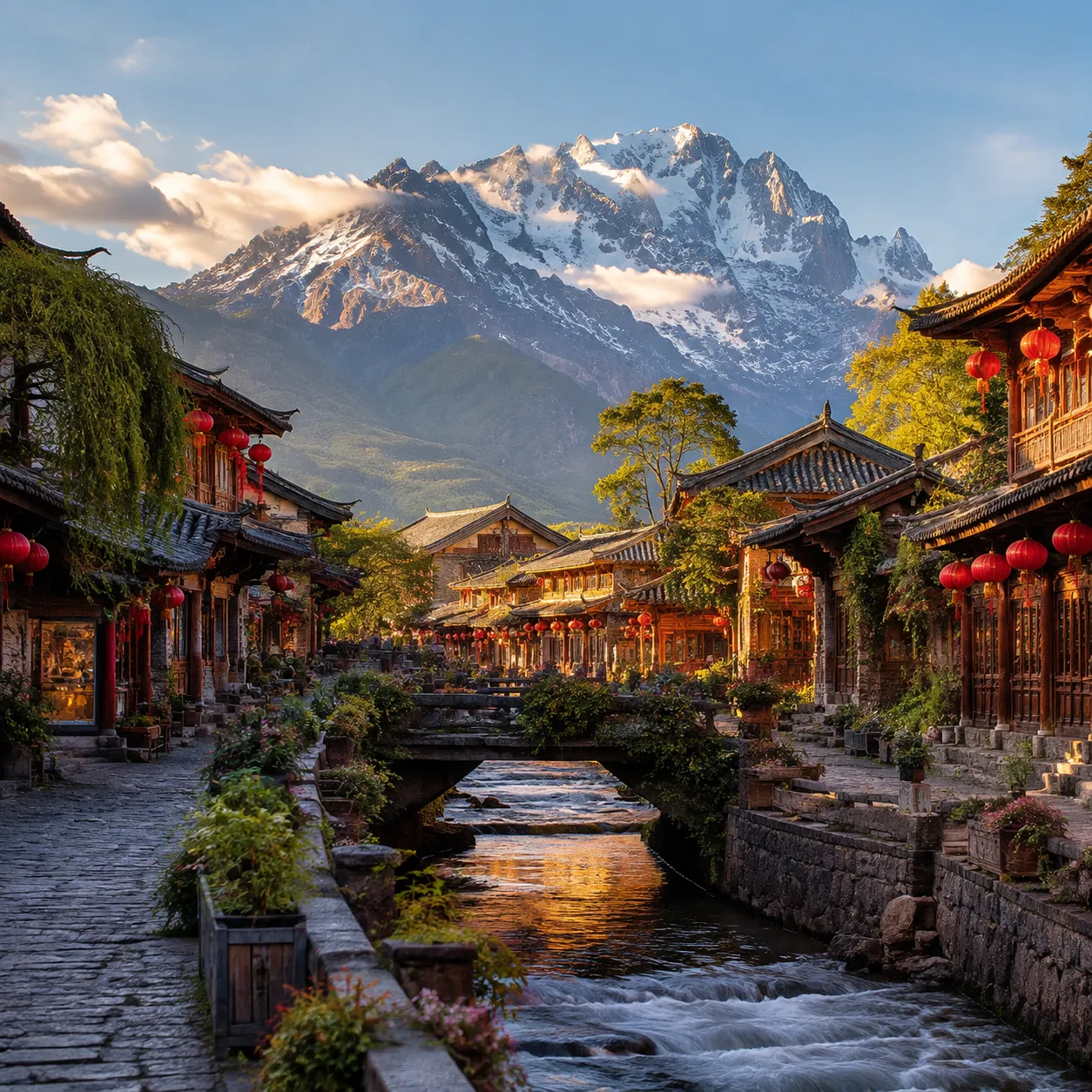
Lijiang, Dali, and Shaxi preserve centuries-old cobblestone streets, wooden bridges, and Naxi culture.
Bai, Naxi, Tibetan, Dai, Hani, Yi and more. Each with distinct language, clothing, and cuisine.
Across the Bridge Noodles, wild mushroom hotpot, steam pot chicken, and Pu'er tea from the oldest tea mountains on Earth.
Kunming is the 'Spring City'. Year-round mild temperatures across the province.
Three types of travelers. One province. Every practical detail you need.
You have been to Southeast Asia but never China. You heard Yunnan is the soft landing you need — less intense than Beijing, more real than Shanghai.
You are in Chiang Mai or Luang Prabang and wondering if you can just take a train into China. The answer is yes, and we show you exactly how.
You have done Beijing, Shanghai, and Xi'an. Now you want the China that most tourists never see. The one with snow mountains, tropical jungles, and 25 cultures in a single province.
Answer three quick questions and we will match you to your ideal Yunnan destination.
Question 1 of 3
The five things every first-time Yunnan visitor needs to sort. We have been where you are.
Apply for an L tourist visa 4-6 weeks ahead. Most nationalities need one. Some qualify for 144-hour transit in Kunming. Check your embassy website.
Install and test a VPN before departure. Download Didi, WeChat, Pleco dictionary, and offline Google Maps. Do all of this before you board the plane.
Buy a Chinese SIM at Kunming airport (CNY 100-200/month). Withdraw CNY 2,000 in cash. Small notes for street food and local buses.
Book your Kunming accommodation in advance. After that, book 1-2 days ahead for flexibility. Kunming is your hub -- get oriented here.
Kunming guideOne trip crosses four climate zones. Pack for your coldest destination (Shangri-La: down to -8C in winter). Layers are everything. See our full packing guide.
Packing guideEight destinations, each a different world. Click through for detailed guides with maps, food, and logistics.
1890m above sea level
View guide
2400m above sea level
View guide
2000m above sea level
View guide
3400m above sea level
View guide
1800m above sea level
View guide
500m above sea level
View guide
2500m above sea level
View guide
1700m above sea level
View guideFrom a 3-day layover escape to a full 14-day loop, we have mapped the routes so you do not have to.
Perfect for a quick escape or layover
The classic Yunnan introduction
The full Yunnan experience
From snow peaks to tropical jungles
High-speed trains connect the northwest corridor. For the south, fly or take the bus. Here is the real logistics.
The northwest corridor has excellent high-speed trains. Buy tickets on Trip.com or 12306 (foreign passport registration available).
Flights from Kunming reach most airports in 1 hour. Best for jumping between northwest and south (Xishuangbanna).
Buses fill gaps where trains do not run. Essential for Yuanyang and rural areas. Guesthouse owners can help you find the right bus station.
Since 2023, the China-Laos Railway connects Kunming directly to Luang Prabang and Vientiane. This is the easiest overland route between China and Southeast Asia and it fundamentally changes how backpackers approach Yunnan.
The train crosses the border at Mohan (China) / Boten (Laos). You will need a Lao visa (available on arrival for most nationalities, USD 40, bring passport photos). Chinese exit formalities are handled at the station. The whole border process takes about 2 hours total.
Click markers to explore destinations. Each opens a detailed guide page.
There is no single best time. Different destinations peak in different months. Here is the breakdown.
From 500m to 3,400m. Altitude sickness is real in Shangri-La. Plan a gradual ascent: Kunming > Dali > Lijiang > Shangri-La.
You will cross four climate zones in one trip. The altitude, not the latitude, decides what you wear.
Light jacket, long pants, comfortable walking shoes, umbrella for afternoon showers
Layers, fleece, scarf, sunscreen, sunglasses (UV is strong at altitude)
Down jacket, thermal base layer, waterproof shell, gloves, SPF50+ sunscreen
Shorts, t-shirts, sandals, mosquito repellent, rain jacket
The practical information you actually need, not the tourist board fluff.
Most visitors need a Chinese tourist visa (L visa) before arrival. 144-hour transit visas are available in Kunming for eligible nationalities. The China-Laos Railway now allows overland entry from Luang Prabang and Vientiane.
Alipay and WeChat Pay now accept foreign Visa/Mastercard. Still, bring RMB cash for rural areas and small vendors. ATMs at ICBC accept foreign cards in Kunming, Dali, and Lijiang.
Install a VPN before arriving. Get a Chinese SIM card at Kunming airport. Google, Instagram, WhatsApp, and Gmail are blocked without VPN. Download offline maps and translation packs before your trip.
Travel insurance covering high-altitude activities is recommended. Pharmacies in cities are well-stocked. In Shangri-La, altitude sickness medication is available. Tap water is not drinkable anywhere in Yunnan.
You will not learn Mandarin in a week. Here is what actually works.
Download the Chinese offline pack before your trip. The camera translation feature reads menus in real time.
The best Chinese-English dictionary. Supports handwriting input: draw the character, get the meaning.
Bind your Visa/Mastercard. Scan QR codes to pay everywhere. Also has a built-in translation tool.
Not just a bed. Yunnan accommodation is part of the experience. Choose wisely.
Sleep in a 700-year-old wooden building around a stone courtyard. Morning tea in the sun, red lanterns at night.
A Tibetan family hosts you. Yak butter tea by the stove. Buddhist prayer flags outside your window.
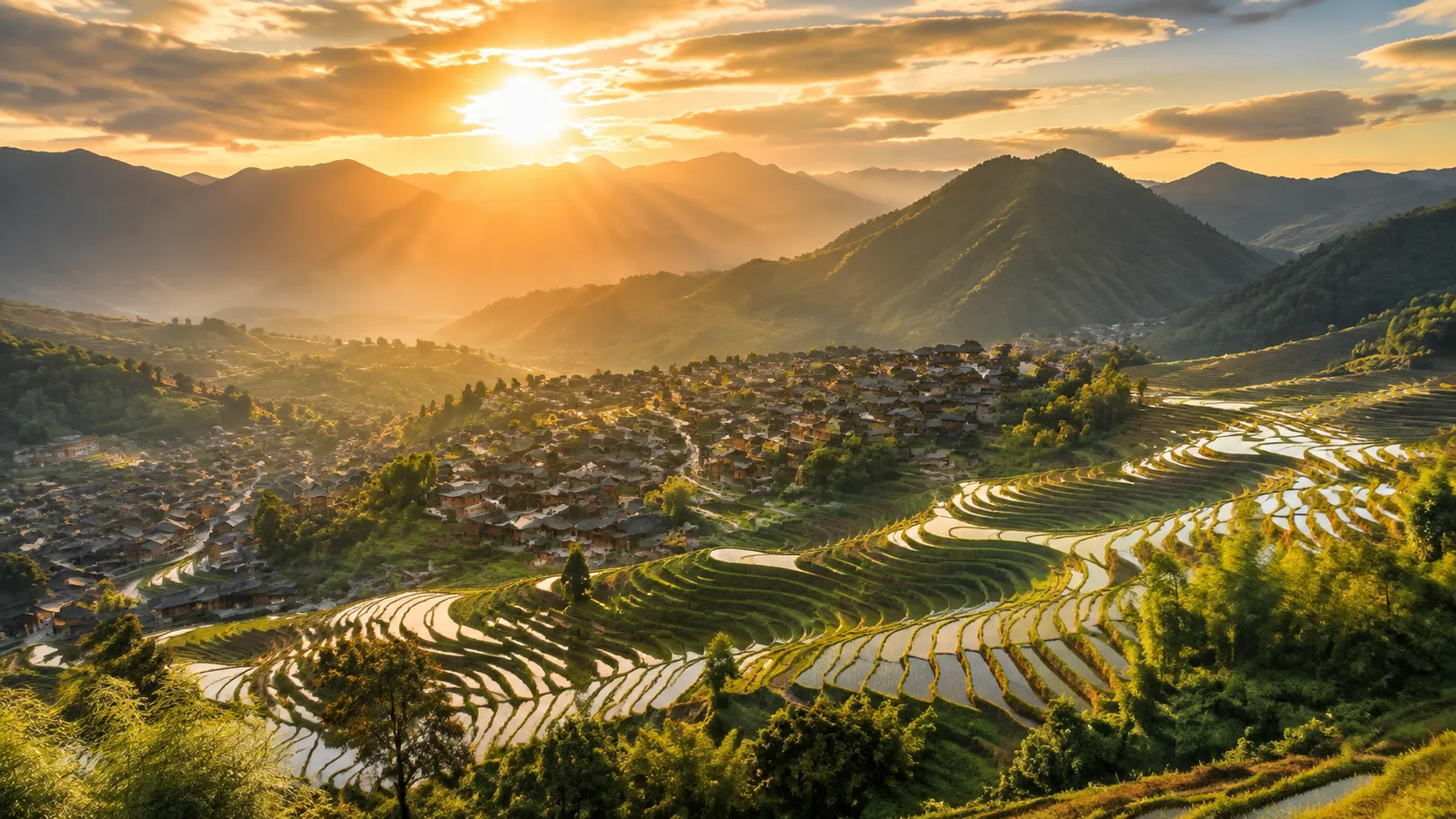
Wake up to sunrise over mirrors of water cascading down mountains. The reason photographers stay for days.
Bamboo and wood houses among tropical plants. Feels more like northern Thailand than China.
Five dishes you can order anywhere. Save these to your phone. Point at them when you need to.
Iconic Yunnan rice noodle soup. Raw ingredients arrive at your table and you cook them in the steaming broth.
Chicken steamed in a clay pot with a chimney. No water added: the steam condenses into the purest broth.
Summer brings dozens of wild mushroom species to markets. Go to a proper restaurant: some are toxic if undercooked.
Yunnan street food staple. A grilled rice patty brushed with spicy sauce, folded around a fried dough stick. CNY 5.
Salty tea churned with yak butter. A Tibetan staple in Shangri-La. An acquired taste that grows on you.
Temple restaurants and Buddhist vegetarian buffets are everywhere in Yunnan. Say 'wo chi su' (I eat vegetarian). Incredible tofu and wild vegetable dishes.
Yunnan has a large Hui Muslim population. Kunming and Dali have halal streets with beef noodle shops and lamb skewers. Look for the halal label.
Rice noodles (mixian) are naturally gluten-free and the staple food across Yunnan. Most dishes are rice-based, not wheat-based. One of the easiest places in China for GF travelers.
Yunnan is the birthplace of tea. The world's oldest cultivated tea trees, some over 1,700 years old, grow in the mountains of Xishuangbanna and Pu'er. This is not just a beverage. It is Yunnan's gift to the world.
Pu'er (pu-erh) is a fermented tea produced exclusively in Yunnan. Unlike green or black tea, pu'er improves with age, like wine. Raw pu'er (sheng) is grassy and bright when young, deepening over decades. Ripe pu'er (shou) is artificially fermented for immediate earthy richness. A well-aged pu'er cake can cost more than a bottle of fine Bordeaux.
Kunming: Xiongda Tea City (one of Asia's largest tea markets). Dali: tea houses along Foreigner Street offer tastings. Xishuangbanna: visit the ancient tea mountains (Nanuo, Jingmai) where trees are centuries old. The Tea Horse Road Museum in Pu'er city traces the ancient trade route.
Start at a tea market where you can taste before buying. A decent daily pu'er cake (357g) costs CNY 80-200. Serious aged cakes run CNY 500-5,000. Avoid tourist shops; go where locals buy. The vendor will brew multiple infusions for you to taste. Buying tea in Yunnan is a social experience, not a transaction.
Per person, per day. Yunnan is cheaper than Beijing or Shanghai, on par with Southeast Asia.
~USD $530 at current exchange rates. Roughly half the cost of an equivalent trip in Western Europe.
Twenty-five ethnic minorities live in Yunnan. Here are the ones you will encounter and the festivals worth planning around.
Known for tie-dye textiles, three-course tea ceremonies, and whitewashed courtyard homes with elaborate paintings. Yunnan's second-largest minority.
The only culture in the world still using pictographic writing (Dongba script). Their ancient music tradition survived the Cultural Revolution.
Prayer flags, butter lamps, and the magnificent Songzanlin Monastery. Share deep cultural ties with Tibet but have distinct local traditions.
Related to Thai and Lao cultures. Celebrate the Water Splashing Festival, live in bamboo stilt houses, and practice Theravada Buddhism.
The architects behind the 1,300-year-old rice terraces. Hani villages built from mud bricks with distinctive mushroom-shaped roofs.
Dai New Year. The entire city turns into a three-day water fight. Everyone participates: locals, tourists, monks, toddlers. Bring a waterproof phone pouch.
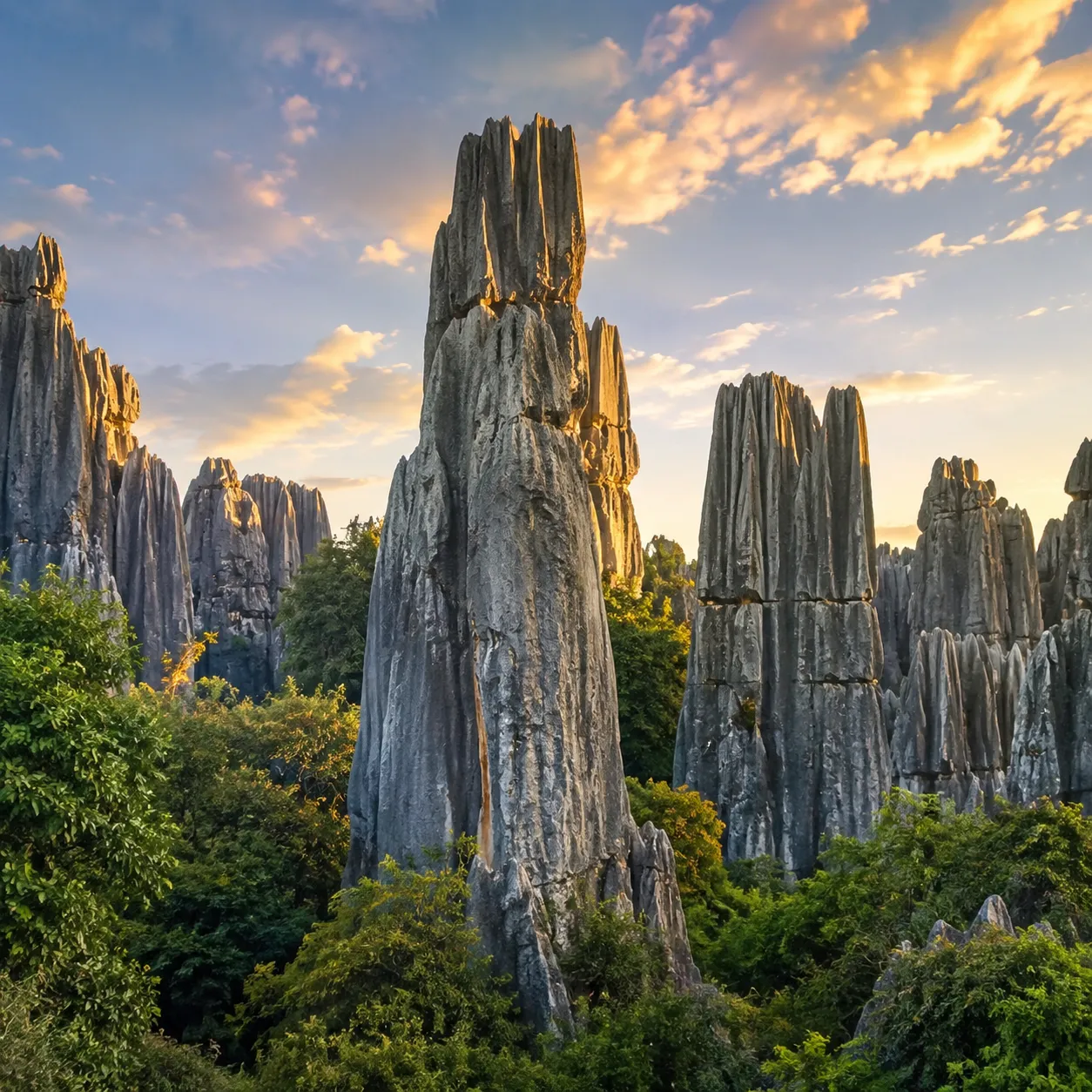
Celebrated by the Yi, Bai, and Naxi. Massive bonfires, torch parades, and traditional wrestling. The biggest celebration is in the Stone Forest area.
Tibetan horseback competitions on the high grasslands. Yak racing, archery, and traditional dance. A window into Tibetan nomadic culture.
A visual preview of what awaits. Click any image for full-screen view.


Yunnan is a photographer's paradise. Here is where to be and when.
Arrive before 6 AM to claim a spot. The terraces reflect dawn colors like mirrors. Bring a telephoto for compressed layers and a wide angle for the full panorama. Foggy mornings add atmosphere but kill the reflection shots.
Take the cable car to 4,506m. The glacier and Blue Moon Valley below are the money shots. UV filter is essential at this altitude. The turquoise lakes at the base look best when the sun is directly overhead (11 AM-2 PM).
Red lanterns reflect in the canals. Use a tripod for long exposures (2-4 seconds) to smooth the water and blur pedestrians. The Black Dragon Pool with Jade Dragon Mountain in the background is the iconic shot.
The largest Tibetan monastery outside Tibet. Shoot from the hillside across the lake at sunset for the golden roof reflections. Inside, no flash photography. Monks are often willing to be photographed if you ask respectfully.
Morning mist through the canopy creates ethereal light shafts. Botanical Garden has the best access. Macro lens for tropical flowers and butterflies. The Dai minority villages offer vibrant cultural portraits.
Rent a bicycle and ride the west shore loop. The Cangshan Mountains reflecting in the lake at sunrise is the signature shot. Traditional fishing boats with cormorants can still be found near Xizhou village in early morning.
The short answer: yes. The honest answer: here is what you should know.
Yunnan is one of China's safest provinces for tourists. Violent crime against foreigners is extremely rare. Tourist police stations exist in Kunming, Dali, and Lijiang with English-speaking officers. Standard travel awareness applies: watch your belongings in crowded bus stations and night markets.
Many women travel Yunnan solo and report feeling safe throughout. Guesthouse owners are protective of their guests. During the day, you will feel at ease in tourist areas. At night, Lijiang and Dali old towns are well-lit and busy. Use Didi (Chinese Uber) rather than wandering empty streets late at night.
Altitude sickness (AMS) is the main health risk in Shangri-La (3,400m+). Symptoms include headache, nausea, and fatigue. Prevent it by ascending gradually (Kunming > Dali > Lijiang > Shangri-La), avoiding alcohol for 48 hours, and drinking plenty of water. If symptoms worsen, descend immediately.
Real experiences from people who have made the trip. No influencers, no sponsored content.
"I spent 3 weeks in Yunnan and it was the best part of my 3-month Asia trip. Lijiang at night with the lanterns, Dali cycling around Erhai Lake, and the Naxi music in an old courtyard... I would go back tomorrow."
"We were nervous about bringing our kids (10 and 13) to China. Kunming was the perfect soft landing. The kids loved the Stone Forest, and Xishuangbanna felt like Thailand but safer and cleaner. The high-speed trains made everything easy."
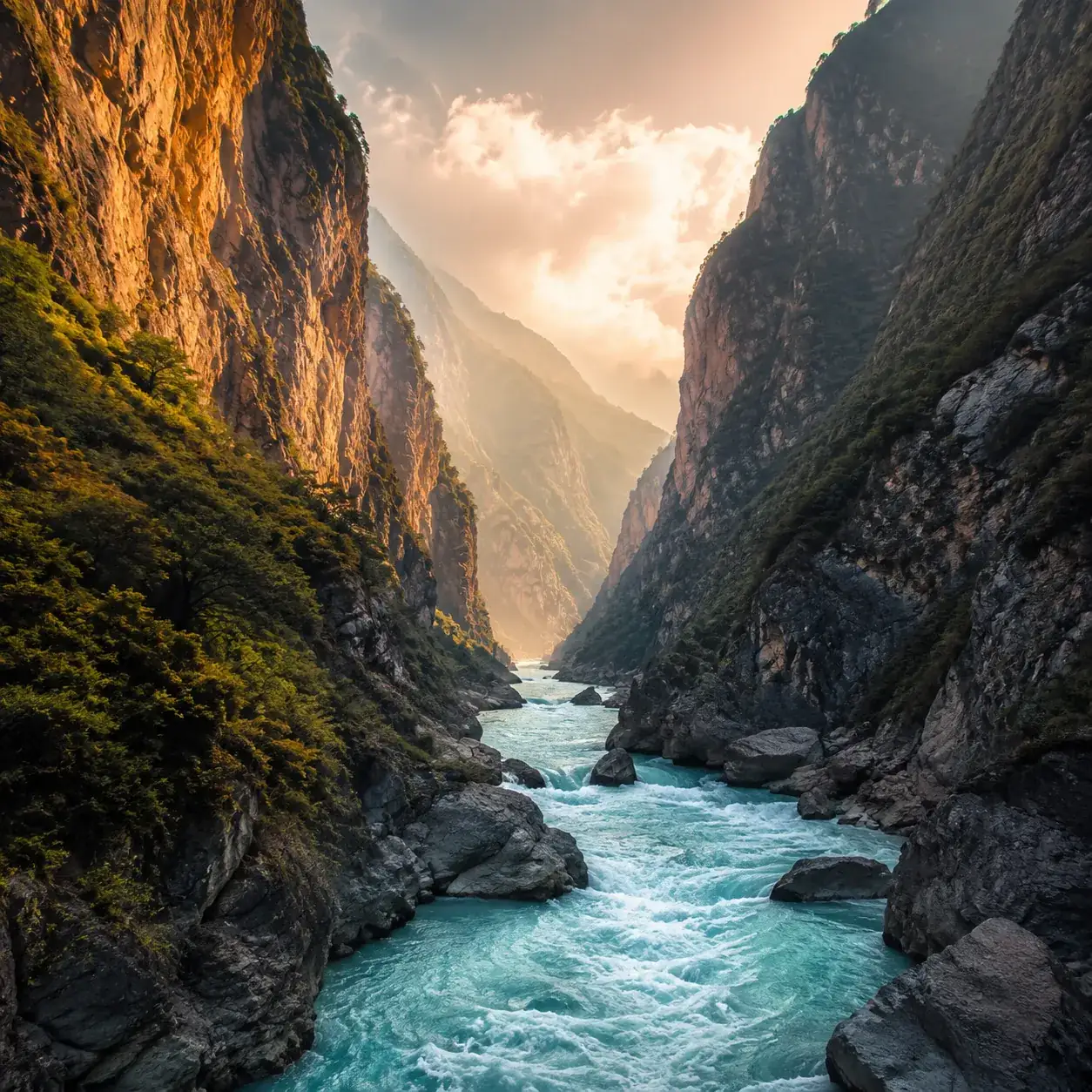
"I have been to 40+ countries and Yunnan is in my top 5. The scale of Tiger Leaping Gorge, the terraces at Yuanyang at sunrise, and the diversity of cultures in one province is unmatched. Skip Beijing and Shanghai -- go straight to Yunnan."
Yunnan is famous for its dramatic landscapes (from Himalayan foothills to tropical rainforests), ancient towns like Lijiang and Dali, 25 ethnic minority cultures, legendary cuisine including Across the Bridge Noodles and wild mushroom hotpot, and year-round spring-like climate.
Yes, Yunnan is one of China's safest regions for travelers, including solo female travelers. Major tourist areas like Kunming, Dali, and Lijiang are well-policed and tourist-friendly. Standard travel precautions apply in remote rural areas.
The best time depends on your destination. For Kunming, Dali, and Lijiang, March to May and September to November offer pleasant weather. For Yuanyang rice terraces, November to March is best. Xishuangbanna is best visited November to April during the dry season.
A minimum of 5 days covers Kunming, Dali, and Lijiang. For a more comprehensive trip including Shangri-La and Tiger Leaping Gorge, plan 8-10 days. A full loop including Xishuangbanna and Yuanyang requires 14+ days.
Yes, it is possible. In major cities like Kunming, Dali, and Lijiang, guesthouse owners often speak some English, and translation apps (Google Translate with offline download, Pleco) are effective. In remote areas, patience and gestures go a long way.
Altitude varies dramatically. Kunming sits at 1,890m (6,200ft), Dali at 2,000m, Lijiang at 2,400m, and Shangri-La at 3,400m (11,150ft) where altitude sickness is possible. Xishuangbanna is only 500m. Plan a gradual ascent.
High-speed trains run from Kunming to Lijiang, taking approximately 3.5 hours and costing CNY 220. Alternatively, flights take about 1 hour and cost CNY 500-900. Many travelers prefer to break the journey in Dali (2h from Kunming by train).
Yunnan is relatively affordable compared to major Chinese cities. Budget travelers can manage on CNY 150-250 per day including guesthouse, local food, and bus transport. Mid-range travelers should budget CNY 400-700 per day.
High-speed trains from Kunming to Dali take 2 hours and cost CNY 128-230. Trains depart from Kunming South Station. Check your ticket carefully. Buses take 4.5 hours and cost CNY 110 from Kunming West Bus Station.
Major hotels and upscale restaurants in Kunming accept Visa and Mastercard. In Lijiang, Dali, and smaller cities, cash and mobile payment dominate. Rural areas and street vendors are cash-only. Always carry RMB as backup.
No. Tipping is not expected anywhere in China, including Yunnan. Restaurants, taxis, tour guides, and hotel staff do not expect tips. The exception is private guides on multi-day trips where CNY 50-100 per day is appreciated but not required.
Tap water is not drinkable anywhere in Yunnan. Bottled water is widely available and cheap (CNY 2-5). Most hotels provide complimentary bottles or a kettle. In remote areas, buy water before arriving. Avoid ice at street stalls unless you see it is from purified water.
Foreigners cannot legally drive in China without a Chinese driver's license, which requires passing a test. International driving permits are not recognized. The alternative is hiring a car with a driver (CNY 500-800 per day, arranged through your guesthouse).
Pu'er tea (from a tea market, not a tourist shop), Bai tie-dye textiles (from Zhoucheng village near Dali), Naxi Dongba script calligraphy, jade and silver jewelry, Yunnan coffee, wild dried mushrooms, and wood carvings from Dali.
It depends on the region. Dai food (Xishuangbanna) is sour-spicy. Sichuan-influenced dishes in Kunming can be hot. Bai food (Dali) is mild. Tibetan food (Shangri-La) is not spicy. Say 'bu yao la' (no spicy) and it will be respected.
Start with a destination guide, choose an itinerary, or dive into the practical details. Yunnan is easier to travel than you think.
Ten things to sort before you board the plane. The visa and VPN are not optional.
Apply for a Chinese tourist visa (L) at your nearest embassy 4-6 weeks ahead. Some nationalities get 144-hour transit in Kunming -- check eligibility.
Install and test before departure. ExpressVPN and Astrill are most reliable inside China. Do not wait until you land.
Download Google Translate Chinese pack, Pleco dictionary, offline maps (Maps.me), and save this guide as PDF.
Book Kunming accommodation in advance. After that, book 1-2 days ahead as you go. Flexibility is worth more than a discount.
Withdraw CNY 2,000 at Kunming airport ATM. Keep small notes (CNY 10, 20, 50) for street food and local buses. Rural vendors rarely take cards.
Buy at Kunming airport arrival hall -- China Unicom or China Mobile. CNY 100-200 for a month of data. Bring your passport.
Download Didi (Chinese Uber) and register with your phone number before departure. Works in all Yunnan cities.
Make sure your policy covers high-altitude trekking (above 3,000m) and medical evacuation. Standard backpacker insurance often caps at 2,500m.
One trip crosses four climate zones. See our packing guide above. The golden rule: pack for the coldest place on your route.
Save your hotel names and train stations in Chinese characters. Show your phone screen to taxi drivers. It works every time.